Spring Awakening: Historic Gardens Coming to Life

Azaleas are flowers that are common to see in spring time in St Augustine.
Stop and smell the roses and see the azaleas blooming in historic St. Augustine! As the weather warms, the flowers have begun to bloom around the Old City’s historic landmarks, bringing to you a vision of the city as it was centuries ago and honoring the diversity of cultures that made their mark on the city.
Spend your days exploring the vibrant gardens, between tall palm trees under the shade of ancient live oaks, soaking up the sun and scent of spring gardens. Whether you’re looking for the peaceful Spanish-style landscape of the González-Alvarez House or the Gilded-Age glory of Flagler College’s historic gardens, St. Augustine’s deep and varied cultural history provides something for everyone.
González-Alvarez House: The Oldest House in Florida

Orange Hibiscus flower
Behind a home dating back over 300 years lies a peaceful garden paradise perfect for both relaxation and celebration! The González-Alvarez House is a historic landmark that holds the title of the Oldest House in Florida. Surviving Spanish, English, and American rule, the González-Alvarez House provides a historic insight into the domestic lives of Floridians from centuries ago.
A guided tour of the gardens is included with the regular admission, from 10am to 5pm. As you walk underneath shaded oaks and across brick pathways, take in a deep breath of the native Florida flora. Fun fact: the gardens behind The González-Alvarez House are a popular wedding venue, speaking to the everlasting beauty of the St. Augustine landmark.
Hispanic Garden: A Tribute to Spanish Roots
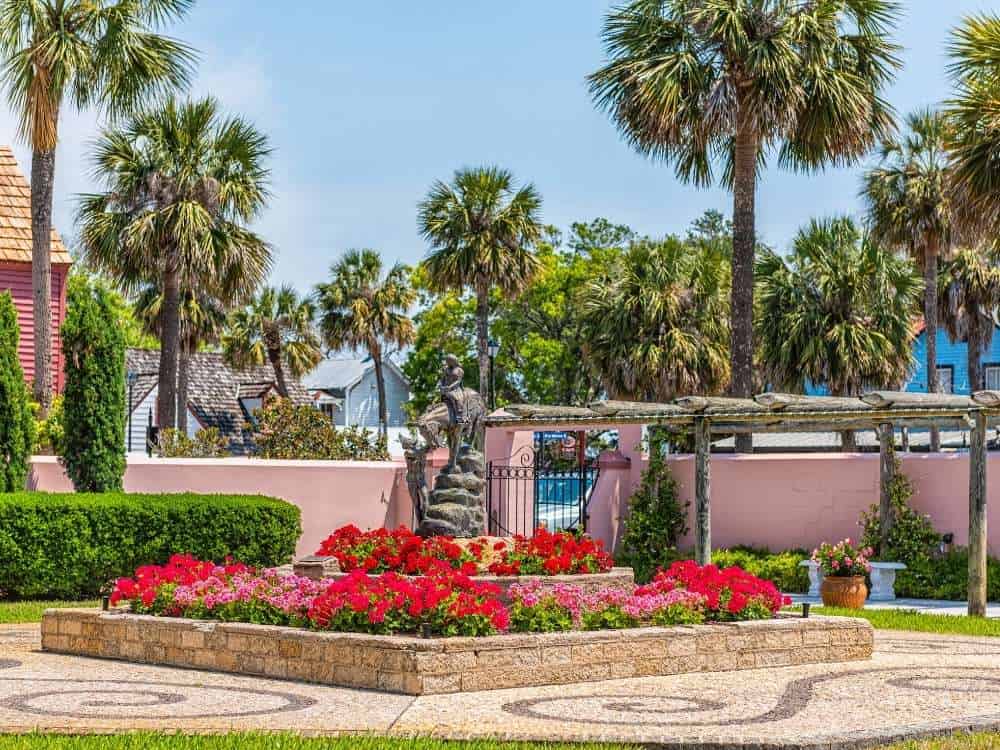
Vibrant historic gardens
Designed by women in the St. Augustine Historical Restoration and Preservation Commission in the 1960s as part of the city’s 400th-anniversary commemoration, the Hispanic Garden draws inspiration from traditional Spanish courtyard layouts. Symmetry, geometric planting beds, and a central focal point create an atmosphere of balance and serenity.
At the center stands a sculpture honoring Queen Isabella of Castile, a nod to Spain’s historic role in the city’s founding. The formal design reflects European garden traditions—orderly hedges, vibrant seasonal flowers, and carefully maintained walkways encourage visitors to slow their pace and take in the details.
In the spring, the Hispanic Gardens come alive. Bright blooms contrast with the surrounding historic buildings. The plants found in the historic gardens– cabbage palms, kumquats, marigolds, Burfordi Holly, and more– are all either native to Florida or introduced from 16th-century Spanish settlers. Influenced by a dedication to the beauty of culture and history, the gardens are an ideal spot for photographs and a quiet break while exploring downtown!
Ribera Garden: A Recreation of Colonial Practicality
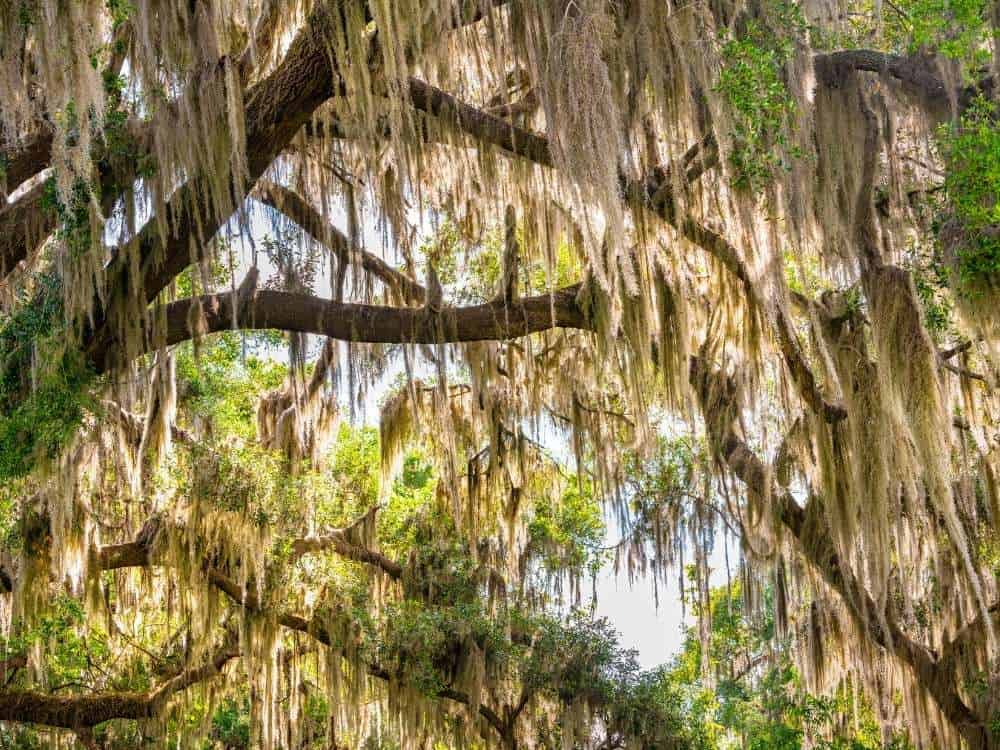
Live Oak canopy branches
While the Hispanic Garden emphasizes formal beauty, the Ribera Garden reflects practicality. This walled colonial-era garden was once used by the Ribera family for growing fruit trees and food crops. In the 18th century, household gardens like this were essential for daily survival, providing fresh produce and medicinal herbs.
Today, the Ribera Garden offers a glimpse into early horticultural practices in St. Augustine. Unlike ornamental landscapes designed for display, this garden represents a working space where agriculture and domestic life intersected. Its layout suggests how colonial families adapted European gardening techniques to Florida’s subtropical climate.
In spring, the garden feels alive with new growth, echoing the rhythms of seasonal planting that once shaped daily life here. Walking through Ribera Garden is like stepping into a living history exhibit—one that reveals how ordinary people sustained themselves in one of America’s earliest settlements.
Flagler College Historic Gardens: Gilded Age Grandeur
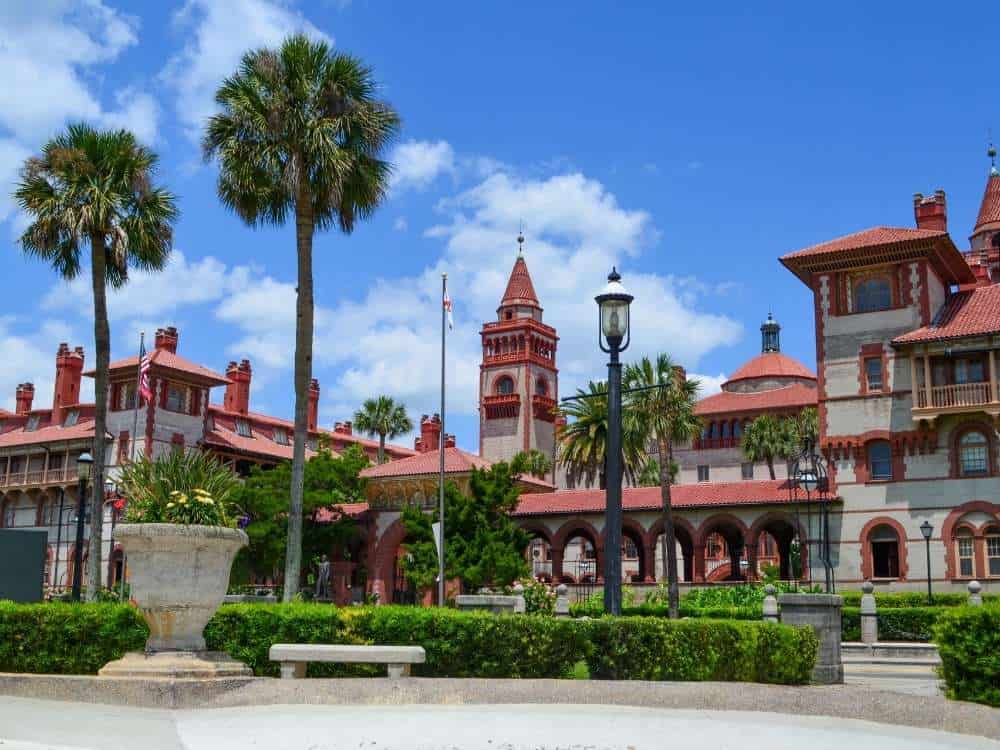
Flagler College in St. Augustine, Florida
If colonial gardens showcase practicality and heritage, the grounds of Flagler College reflect extravagance and ambition! Once the site of the grand Ponce de León Hotel, built by industrialist Henry Flagler in 1888, the property exemplifies Gilded Age luxury.
The hotel, now home to Flagler College, was designed to impress wealthy northern visitors. Its landscaping followed suit, with formal lawns, decorative pathways, and carefully curated plantings meant to create an atmosphere of tropical elegance. The gardens complemented the Spanish Renaissance Revival architecture, reinforcing the sense of opulence. In spring, the historic gardens are reminiscent of their former Gilded Age glory. Palm-lined walkways, manicured hedges, and blooming flowerbeds frame the historic architecture. The large scale and emphasis on opulence contrast with the intimacy of other, earlier gardens and shows St. Augustine through the lens of a luxurious paradise away from winter, as it was marketed by Henry Flagler.
Today, you can stroll the grounds and appreciate how landscape design enhanced the hotel’s architectural drama. Campus grounds are typically open to the public, although they also offer guided tours. The gardens represent a different chapter of the city’s story—one of economic transformation, tourism, and national presence.
Summary
Spring is the perfect time to explore the historic gardens of St. Augustine, where architecture and landscape combine to tell a story more than 450 years in the making. From the formal symmetry of the Hispanic Garden to the practical colonial layout of Ribera Garden, each site offers a distinct window into the past. Flagler College showcases Gilded Age elegance, and who knows—maybe you’ll discover your perfect wedding venue in the historic gardens of the González-Alvarez House.
Beyond their spring blooms, these beautiful gardens will deepen your appreciation for the city’s cultural history. Whether strolling independently or joining a guided tour, you can experience St. Augustine not just in buildings but also in the lush and vibrant gardens surrounding them.
Conclusion
If you’re still looking for more of the city’s natural landmarks, don’t forget to check out The Old Senator. A beautiful Live Oak, standing over 600 years old, this regal tree is located north of the Historic District of St. Augustine. With the spring gardens in full bloom, so much of the city is perfect for outdoor sightseeing. Get the most out of your spring trip to St. Augustine by taking one of many guided tours through the city. Getting too warm to keep walking? Take a relaxing guided country carriage tour, and you can experience over 450 years of the city’s fascinating cultural history.
FAQ:
When are the Flagler College gardens open?
Flagler College grounds are open and free to the public during regular business hours. Guided tours are also available, but not required to see the gardens.
When is the Gonzalez-Alvarez house open?
A guided tour of the gardens is included with the regular admission, from 10am to 5pm.
What are good restaurants around the historic gardens?
Casa Maya and Prohibition Kitchen are two highly rated restaurants in walking distance of St. Augustine’s historic gardens. See this list for more fantastic places to eat in the city.
Disclaimer: Every effort is made to ensure the accuracy of the information in this article. Please credit OldCity.com when sharing and re-posting.
The post Spring Awakening: Historic Gardens Coming to Life appeared first on St. Augustine, FL | Oldcity.com.
#mortgagestaugustine, #staugustinecondomortgage, #staugustinecondomortgagerates, #staugustinecondotelfinancing, #staugustinecondotelmortgagerates, #staugustinemortgage, #staugustinemortgagebroker, #staugustinemortgageclculator, #staugustinemortgagecompany, #staugustinemortgagerates