Women’s History Month: Trailblazing Women of Old City
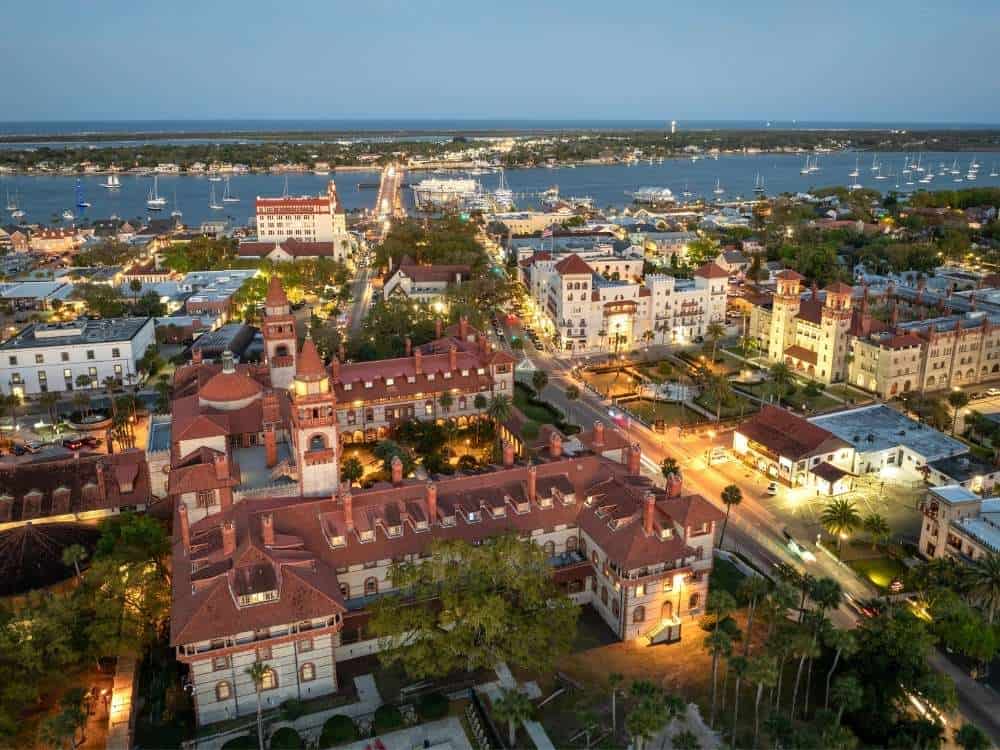
Aerial view of Flagler College campus
Every March, Women’s History Month invites us to pause, look beyond the familiar faces in history books, and ask a more honest question: who else was here and made this possible? St. Augustine, Florida, one of the oldest and most historically significant sites in America, offers some extraordinary answers to that question. The city’s cobblestone streets, centuries-old fortresses, and storied neighborhoods have been witness to more than 450 years’ worth of conquest, emancipation, and transformation. Woven throughout every chapter of that story are women.
Their names were not always inscribed on plaques, nor were their portraits hung in museums. But their fingerprints are on every wall and stone that St. Augustine is made of, and their voices are behind every hard-won freedom the city has known. This Women’s History Month, we invite you to walk in their footsteps and visit the historic landmarks where women’s courage, creativity, and perseverance changed the course of history.
Walking Her Story This March
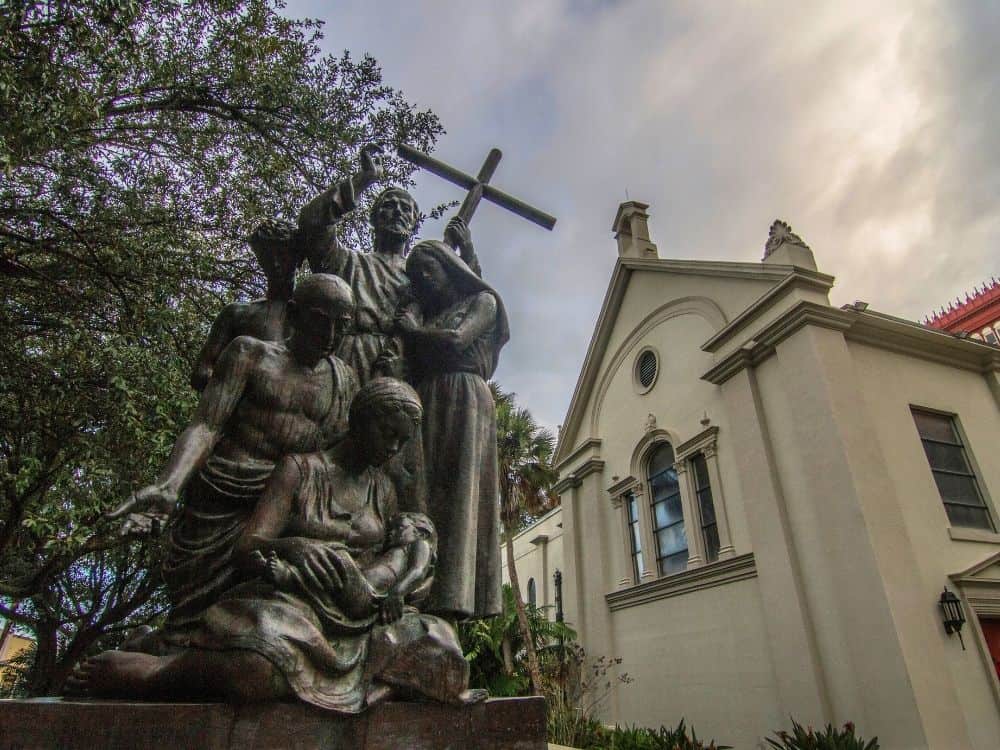
St. Augustine Cathedral Basilica
Women’s History Month began as a week-long recognition in 1978 in Sonoma, California, before Congress formally designated March as a national month of recognition in 1987. Its founding impulse was simple and radical: to insist that women’s contributions to American life be recognized, taught, and remembered. Nearly forty years later, that work is still far from complete.
In St. Augustine, a city where you can walk from a 17th-century fort to a Civil War-era inn to a 1960s civil rights landmark in the span of one afternoon, that work takes on a particular weight. Every building here holds the memory of women who were not supposed to matter, be remembered, or certainly not change the course of events. And yet they did, every single time.
This March, walk the streets of America’s oldest city with new eyes. Touch the coquina walls and remember the women who sheltered behind them and held communities together under siege. Walk down Aviles Street and think of Louisa Fatio balancing her ledgers in a world that denied her a legal voice. Stand in Lincolnville and honor the women who walked into the Atlantic and refused to leave. Look up at Flagler College’s painted ceilings and imagine what the women depicted there would think of the students who study beneath them today. Visit all the St. Augustine places that have felt the impact of the women who lived there.
Ximenez-Fatio House: Florida’s First Female Entrepreneurs
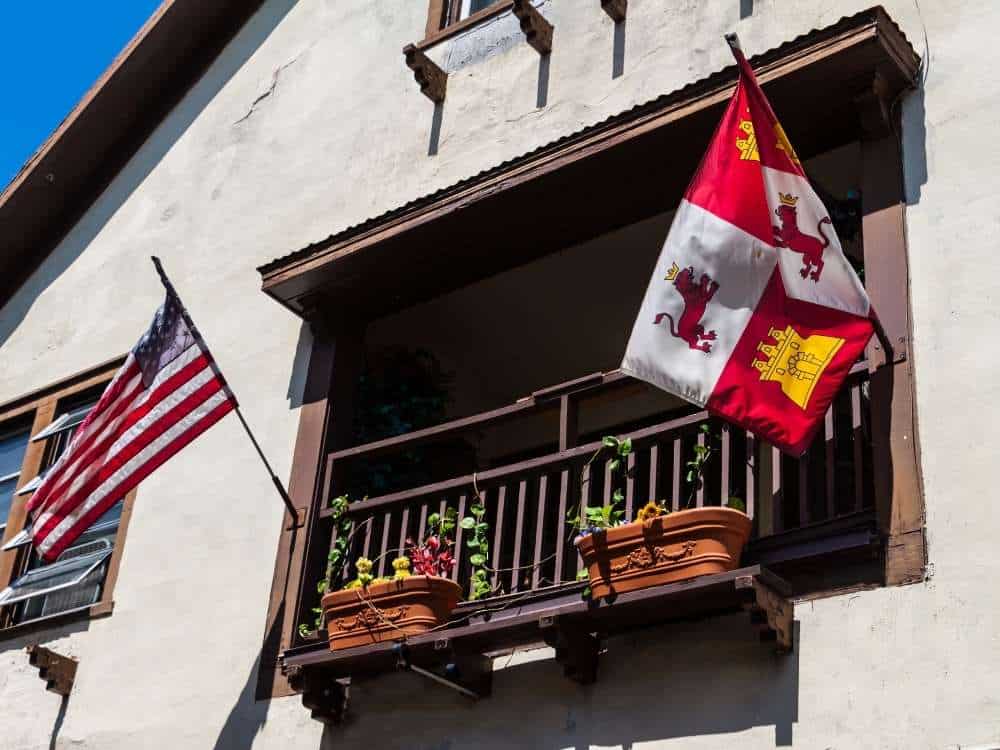
Spanish and US flags flying along Aviles street, St. Augustine, FL
On Aviles Street stands a two-story coquina house that tells one of St. Augustine’s most remarkable stories of female enterprise. The Ximenez-Fatio House, built around 1798 by Spanish merchant Andres Ximenez, passed through several hands before becoming an extraordinary women-run business that thrived for generations.
After Ximenez’s widow sold the property in 1830 to Margaret Cook, she transformed it into a fashionable boarding house that would be run by a series of resourceful women. The most celebrated was Louisa Fatio, a Swiss immigrant who ran the inn from the 1850s through the post-Civil War era. St. Augustine had begun to attract wealthy Northerners seeking its mild winters and healing air, and Louisa built a reputation for refined hospitality that rivaled anything the South had to offer. She managed staff, kept accounts, marketed to an elite clientele, and navigated the upheavals of the Civil War and Reconstruction. All this was accomplished during a time when married women in Florida could not legally own property, and women had no voice in the political decisions that shaped their lives.
Today, the Ximenez-Fatio House is a museum operated by the National Society of the Colonial Dames of America in the State of Florida. Walking through its rooms this Women’s History Month is a reminder that female entrepreneurship is not a modern invention; it’s a long, often unacknowledged tradition. Louisa Fatio and the women who came before her made their way in the world using the strength of their wits, their work, and their refusal to be limited by the law.
Lincolnville: The Women Who Moved a Nation
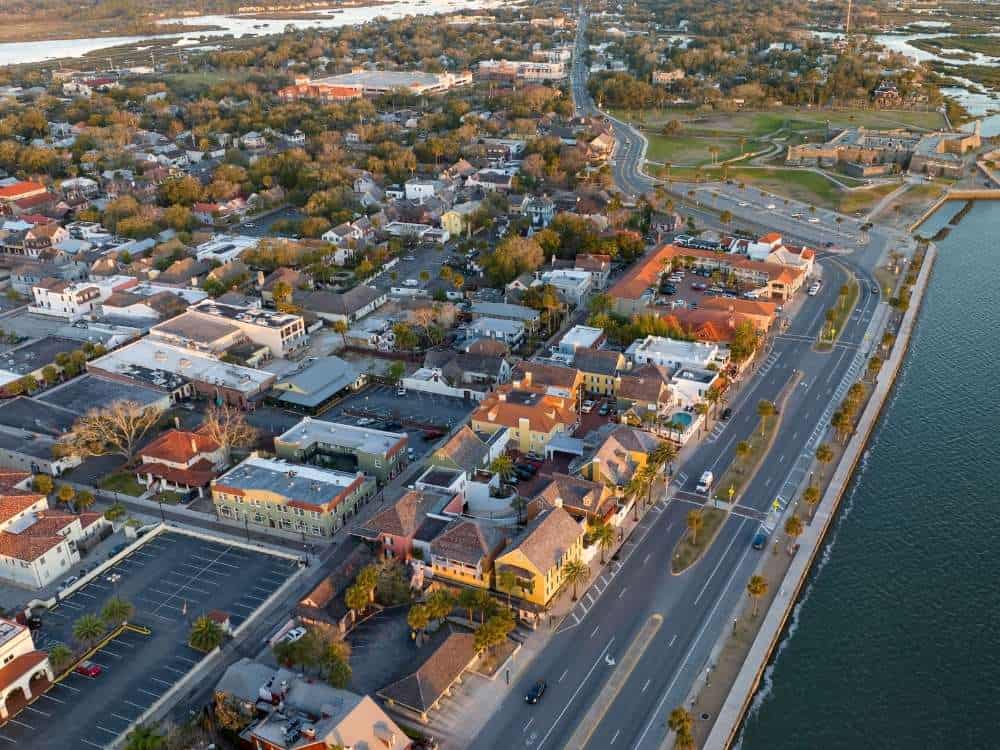
Aerial view of St. Augustine
Of all the places in St. Augustine where women’s history lives and breathes, none is more powerful than Lincolnville. Established after the Civil War by free enslaved people, this neighborhood, which is now listed on the National Register of Historic Places, became the heart of St. Augustine’s black community. Then, in the 1960s, it was the center of one of the most pivotal civil rights campaigns in American history.
In 1963 and 1964, St. Augustine became a critical backdrop in the fight for civil rights legislation. Demonstrations were organized here, including sit-ins at segregated lunch counters on St. George Street, night marches through the historic district, and the famous “wade-ins” at St. Augustine beach that drew national attention and federal action. Women were not on the sidelines of these events. Instead, they were often leading them.
Local women like Mrs. Fannie Fullerwood opened their Lincolnville homes as safe houses, feeding and sheltering demonstrators who had been beaten, jailed, or threatened. Young African American women would sit at lunch counters and refuse to move as a crowd screamed at them. Women of all races locked arms and waded into the waves together, knowing that violence might greet them on the sand. The combined efforts of these courageous women helped provide the moral urgency that pushed Congress to pass the Civil Rights Act of 1964.
The Lincolnville Museum and Cultural Center preserves and honors this legacy. A visit there during Women’s History Month is not simply a look into the past; it’s a reckoning with how much was risked and how much was won by women whose names history has been slow to record.
Flagler College: From Gilded Cage to Higher Ground
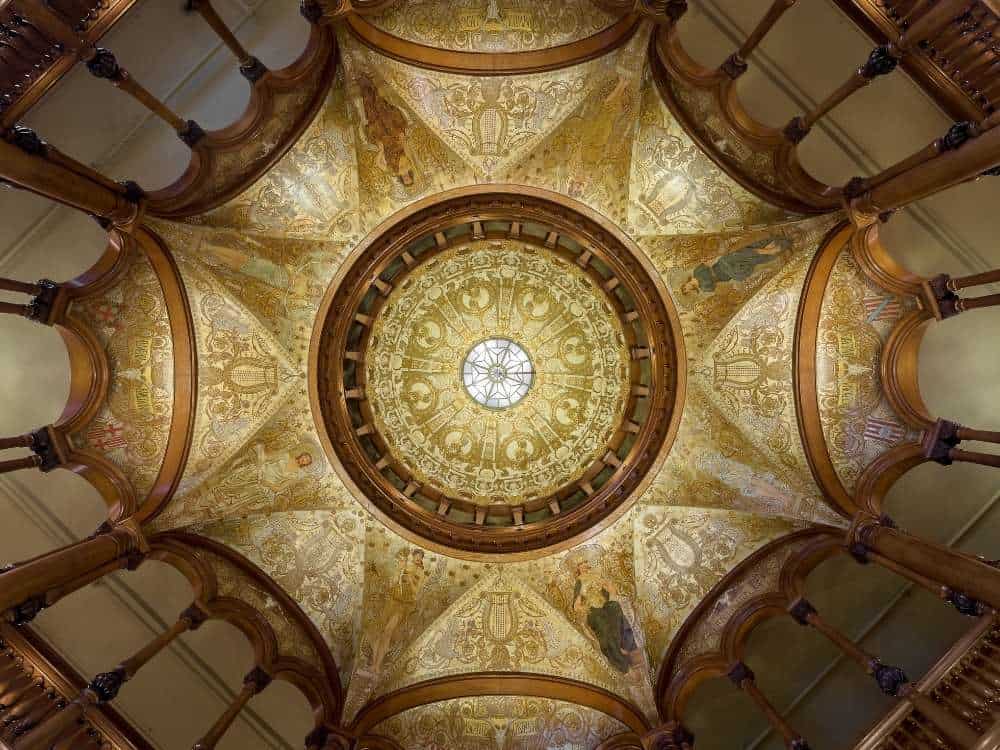
Ceiling of the Ponce de Leon Hotel, Flagler College, St. Augustine, FL
In 1888, oil baron and railroad magnate Henry Flagler opened the Ponce de León Hotel, a breathtaking Spanish Renaissance structure that transformed St. Augustine into the prime destination of America’s Gilded Age elite. Today, the building houses Flagler College, and its stunning architecture draws visitors from around the world. But its Women’s History Month story is one of profound and sometimes painful irony.
The hotel’s grand dining room ceiling is adorned with luminous murals painted by George Maynard depicting women as allegorical figures- Adventure, Discovery, Conquest, and Civilization as well as the four seasons. Yet in 1888, the real women who dined beneath those ceilings could not vote, could not attend most universities, and in many states could not own property. They were celebrated as symbols while being denied as citizens.
Today, the majority of Flagler College’s student body is female. The women who study beneath Maynard’s murals of idealized womanhood are pursuing a knowledge and earning degrees that the women painted on the ceiling were never permitted to do. That transformation from ornament to agent is at the heart of what Women’s History Month asks us to celebrate.
The Colonial Quarter: The Women Who Built a Colony
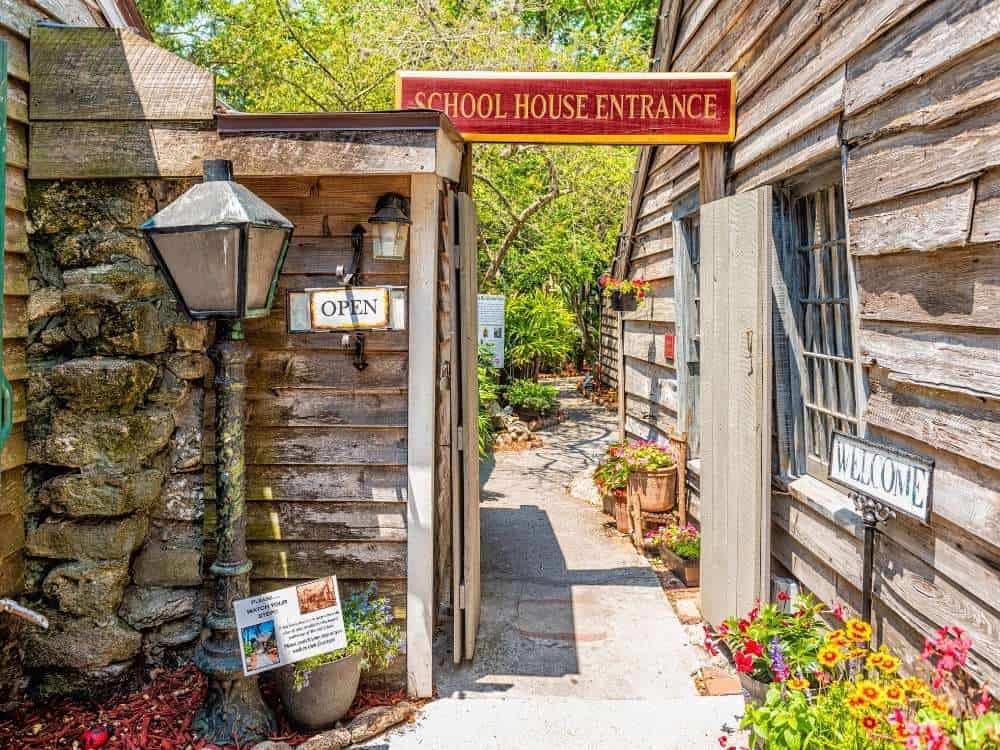
Oldest Wooden School House entrance in St. Augustine, FL
The Colonial Quarter living history museum brings to life the St. Augustine of the 16th, 17th, and 18th centuries; a world of blacksmiths, sailors, soldiers, and settlers. But past the cannon demonstrations and musket firings, you’ll find a deeper story about the women who none of this would have survived without.
Spanish colonial women were the backbone of the domestic economy. They preserved food against the constant threat of shortage, wove and mended the textiles that clothed entire families, and ran small trades that supplemented household income. When supply ships were delayed, it was women’s knowledge of preservation, rationing, and substitute ingredients that prevented starvation. They were a core part of the colonial infrastructure.
Indigenous women deserve equal recognition in this space. The Timucua people had lived in the region for centuries before the Spanish arrival, and their women carried irreplaceable knowledge of local plants, medicines, hunting grounds, and waterways. Many of these women married into Spanish families, and the knowledge they brought with them became the difference between a colony that collapsed in its early years or one that endured for centuries.
The Colonial Quarter offers a rare opportunity to honor those contributions, and Women’s History Month is the perfect moment to seek out and celebrate the Indigenous women whose legacies extend beyond the historical record.
Summary
Women’s History Month is not just another event on the calendar; it’s a yearly reminder that history has always had a selective memory. The women who fed colonies, built businesses, raised movements, and held communities together during their darkest hours were rarely the ones who got their names on buildings or their portraits in textbooks. March is the month where we correct the record, widen the lens, and make space for the stories that were always true, but not always told. Honoring women’s history isn’t about adding a footnote to the story we already know; it’s about finally telling the whole one, and there’s no place more perfect for that than St. Augustine.
Frequently Asked Questions
Where to learn about women’s history in St. Augustine, FL
Several sites in St. Augustine explore women’s stories year-round, including the Ximenez-Fatio House Museum as one of the few historic sites in the U.S. operated by women. There’s also the Lincolnville Museum, which highlights African American women’s roles in the community and civil rights movement.
Famous Women in St. Augustine history
St. Augustine has a rich history of influential women, including Zora Neale Hurston, who drew inspiration from Florida’s Black communities, and the women of the Flagler era who shaped the city’s Gilded Age culture. The city also honors the stories of Minorcan, African American, and Native women who helped build its centuries-long legacy.
Conclusion
The exploration of Florida’s history doesn’t have to stop after Women’s History Month. St. Augustine, our Nations Oldest City, has centuries’ worth of stories ready to have their dust blown off and contents read. One step on the city’s ancient cobblestone streets is a few hundred years’ worth of history, courage, and freedom.
Disclaimer: Every effort is made to ensure the accuracy of the information in this article. Please credit OldCity.com when sharing and re-posting.
The post Women’s History Month: Trailblazing Women of Old City appeared first on St. Augustine, FL | Oldcity.com.
#mortgagestaugustine, #staugustinecondomortgage, #staugustinecondomortgagerates, #staugustinecondotelfinancing, #staugustinecondotelmortgagerates, #staugustinemortgage, #staugustinemortgagebroker, #staugustinemortgageclculator, #staugustinemortgagecompany, #staugustinemortgagerates